
Why Ndutu & Southern Serengeti
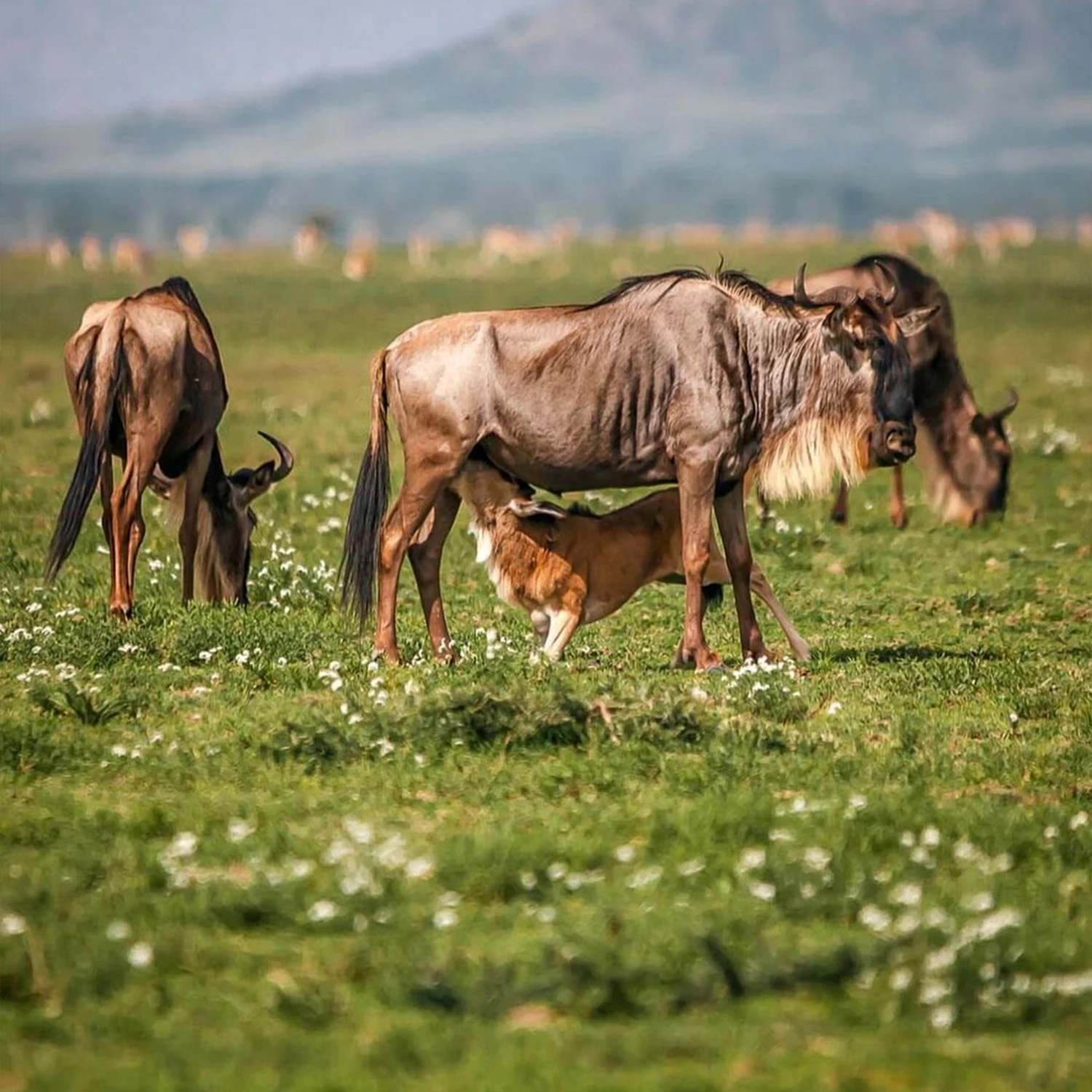
Ndutu sits across the southern Serengeti and Ngorongoro Conservation Area ecosystem and becomes one of Tanzania’s most important seasonal safari zones during the green months. From roughly December to March, short-grass plains can hold large concentrations of wildebeest, zebra and predators during the calving period.
Calving season
The attraction is not a single scheduled event but a seasonal concentration of herds across the southern plains. Newborn calves, large wildebeest groups and predator activity can make this one of the most dynamic times to photograph the migration, but movement changes with rainfall and grazing conditions.
Photography
Ndutu is especially attractive to photographers because the open short-grass landscape gives clean backgrounds, low viewing angles and frequent predator-prey interactions. A private vehicle is valuable when photography is a priority because it allows more control over position and time spent at sightings.
Routing
Ndutu combines naturally with Ngorongoro Crater and Central Serengeti. Depending on flight schedules and road conditions, it can be reached by road from the highlands or by scheduled light aircraft to nearby airstrips.
Where to stay
Seasonal tented camps move into the broader southern ecosystem for the calving months, while permanent lodges around Lake Ndutu offer another option. Exact camp location matters because herd distribution shifts, so the itinerary should match both season and current operating location.
Camps & Lodges in this safari region
Ndutu Safari Lodge
A long-established lodge near Lake Ndutu and a practical base for the southern migration ecosystem.
Seasonal / Safari CampLake Masek Tented Lodge
A tented lodge near the Ndutu lakes used during calving-season and southern Serengeti safaris.
Seasonal / Safari CampLemala Ndutu Mobile Tented Camp
A seasonal mobile camp positioned for the southern migration period.
Seasonal / Safari CampSanctuary Kusini
A safari camp in the southern Serengeti ecosystem that suits green-season and calving-focused itineraries.